2 month old baby milestones
2-Month-Old Baby Milestones: Smiles, Sounds and Head Lifting
By two months, many babies look at familiar faces, make sounds beyond crying, react to loud sounds and briefly hold their head up during tummy time. Milestones describe common patterns, not a race or a diagnosis.
Reviewed and updated:
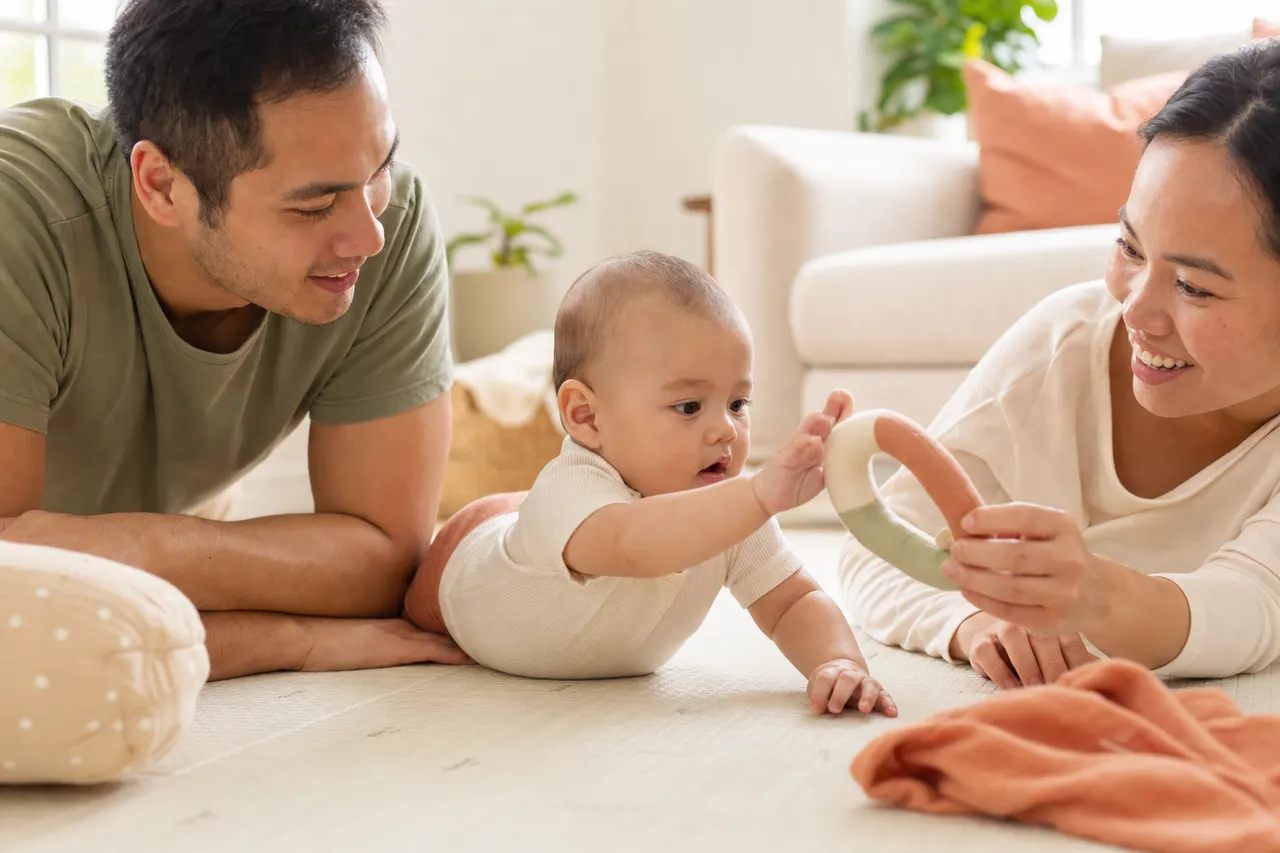
Social and communication changes
- Calms when spoken to or picked up
- Looks at a caregiver’s face
- Seems pleased when a familiar person approaches
- Smiles back during warm face-to-face interaction
- Makes sounds other than crying and reacts to loud sounds
Attention and movement
- Watches a person move nearby
- Looks at a toy for several seconds
- Moves both arms and both legs
- Opens the hands briefly
- Lifts and holds the head briefly while awake on the tummy
Simple ways to support development
Talk, smile and pause so your baby can respond. Offer several short, supervised tummy-time opportunities each day on a firm floor mat or on your chest while you are fully awake. Follow your baby’s cues and stop when they need rest.
When to discuss development
Common questions
Should every two-month-old smile socially?
Milestone checklists describe what most children can do by an age, but timing varies. If your baby is not yet smiling or you have any concern about interaction, vision or hearing, discuss it at the next visit or sooner.
Should I use my premature baby’s birth age?
CDC advises using corrected age for milestone checklists when a baby was born more than three weeks early. Your clinical team can explain how long to use it.