Baby development
Baby development in the first six months
Practical, evidence-based guides to early milestones, movement, play and communication — with clear reminders that every baby develops at an individual pace.

2-month milestones
By two months, many babies look at familiar faces, make sounds beyond crying, react to loud sounds and briefly hold their head up during tummy time. Milestones describe common patterns, not a race or a diagnosis.
4-month milestones
Around four months, many babies smile to gain attention, chuckle, make cooing sounds, turn toward a voice, hold the head steadier and bring their hands to their mouth.
6-month milestones
By six months, many babies know familiar people, laugh, take turns making sounds, reach for wanted toys, roll from tummy to back and lean on their hands while sitting with support.
Head control
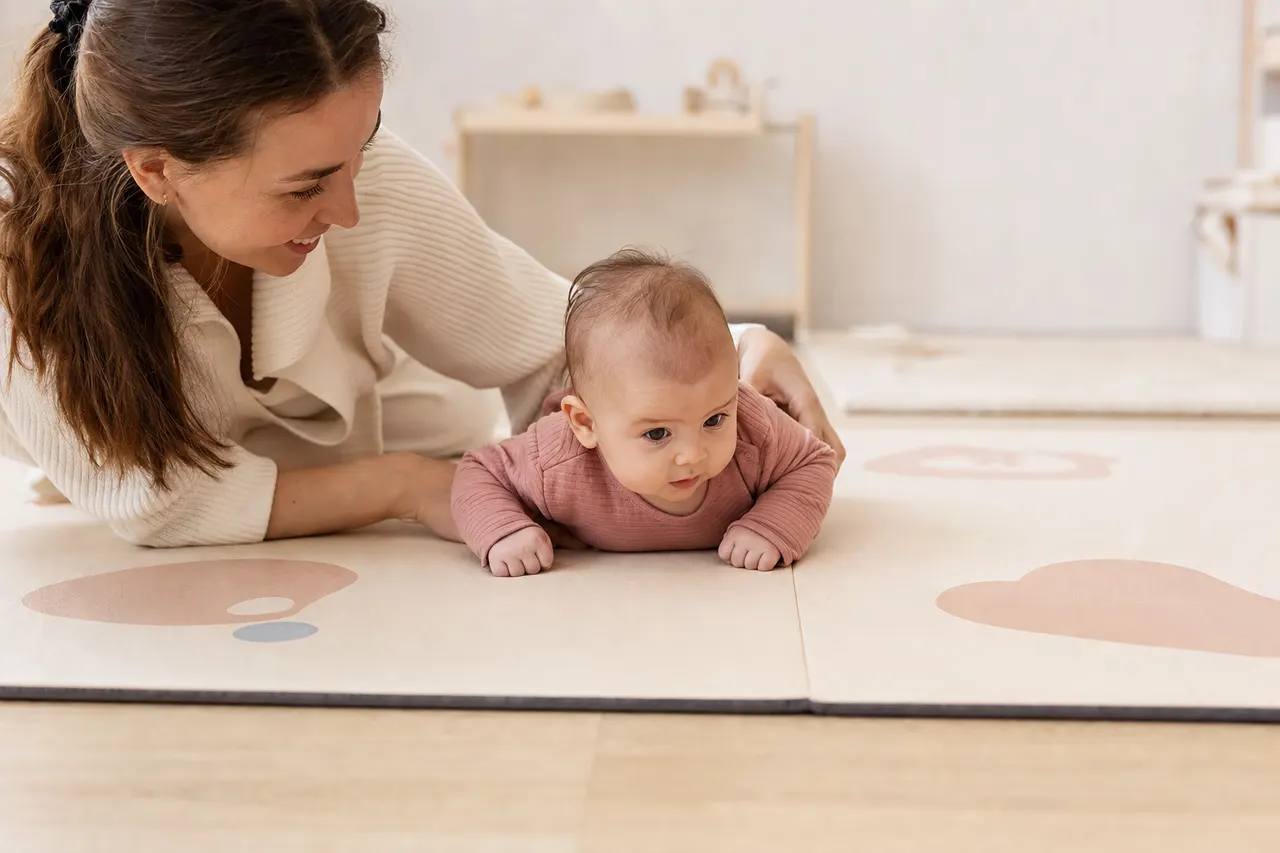
Head control develops gradually through everyday movement and supervised awake tummy time. Newborns need full support; brief lifting appears early, then steadier control grows over the following months.
Rolling over
Rolling emerges over a range of ages as head, shoulder and trunk control improve. Many babies roll from tummy to back by around six months, while the opposite direction may come before or after.
Learning to sit
Sitting develops from head and trunk control, weight shifting and protective use of the hands. Around six months many babies lean on their hands for support; stable independent sitting often comes later.
Play from 0–6 months
The most useful early play is simple and responsive: faces, voices, touch, floor movement, songs, books and safe objects to look at and reach for. Babies do not need constant entertainment.

Development concerns
A missed milestone does not diagnose a condition, but a parent’s concern deserves attention. Observe specific changes, talk with your baby’s clinician and ask about developmental screening rather than waiting without a plan.