when do babies roll over
When Do Babies Roll Over? Safe Floor Practice and Sleep Changes
Rolling emerges over a range of ages as head, shoulder and trunk control improve. Many babies roll from tummy to back by around six months, while the opposite direction may come before or after.
Reviewed and updated:
How rolling develops
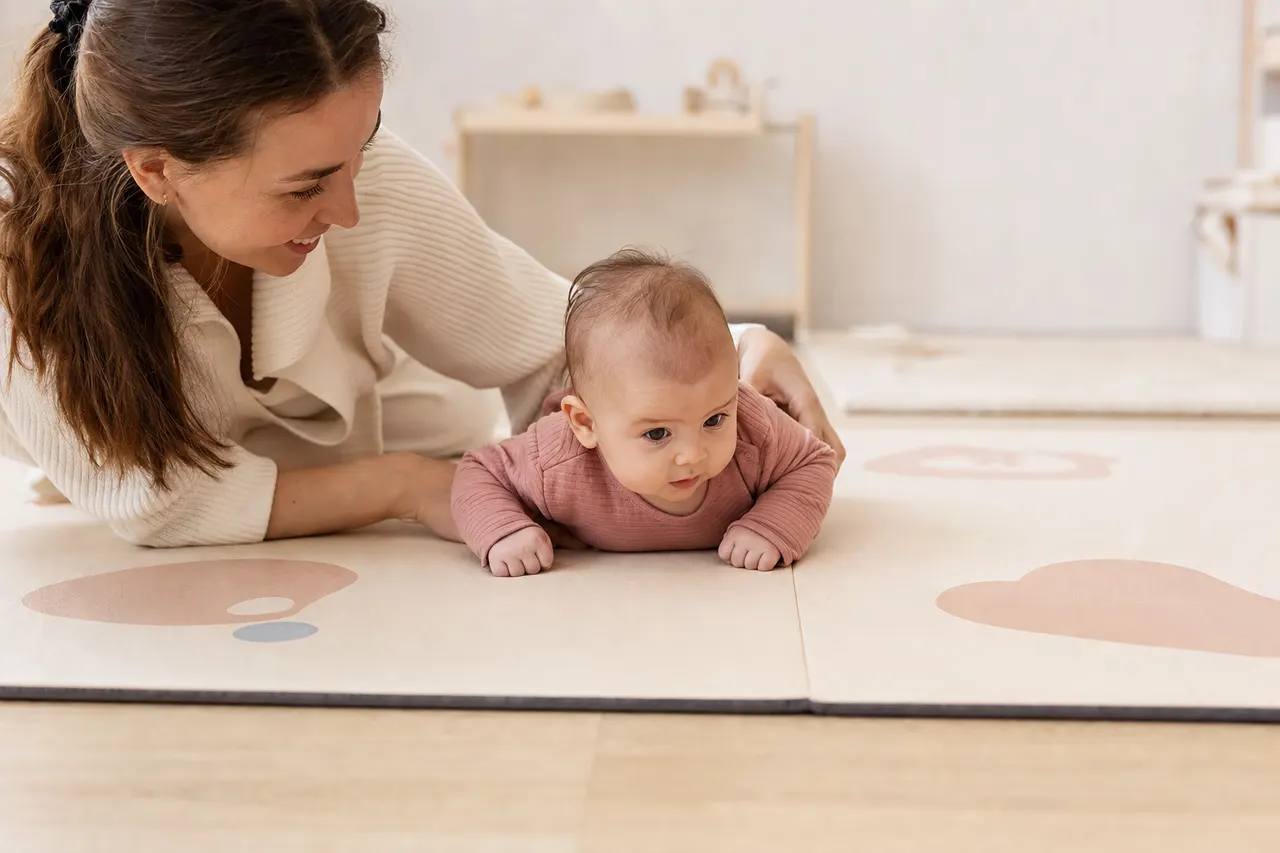
Babies first learn to turn the head, shift weight and reach across the body. Accidental early rolls can happen, then purposeful rolling becomes more consistent. Direction and timing vary.
Encourage movement safely
- Offer daily awake floor time on the back and tummy
- Place one safe toy slightly to the side to invite looking and reaching
- Let your baby work out the movement rather than pulling an arm or leg
- Limit long periods in equipment that restricts free movement
- Keep hands close on changing tables and other raised surfaces
Rolling changes sleep safety
Always place your baby down on their back for sleep. Once rolling attempts begin, stop swaddling. Use a firm, flat, level sleep surface with only a fitted sheet and no positioners, bumpers, pillows or loose bedding.
When to seek advice
Common questions
Should I turn my baby back all night once they can roll?
Continue placing the baby on their back at the start of every sleep and keep the sleep space clear. Ask your health service for individual advice if your baby has a medical condition.
Does an early accidental roll mean strong head control?
Not necessarily. Body shape and reflexive movement can cause an early roll. Continue supporting the head and providing supervised practice.