when do babies hold head up
When Do Babies Hold Their Head Up? How Head Control Develops
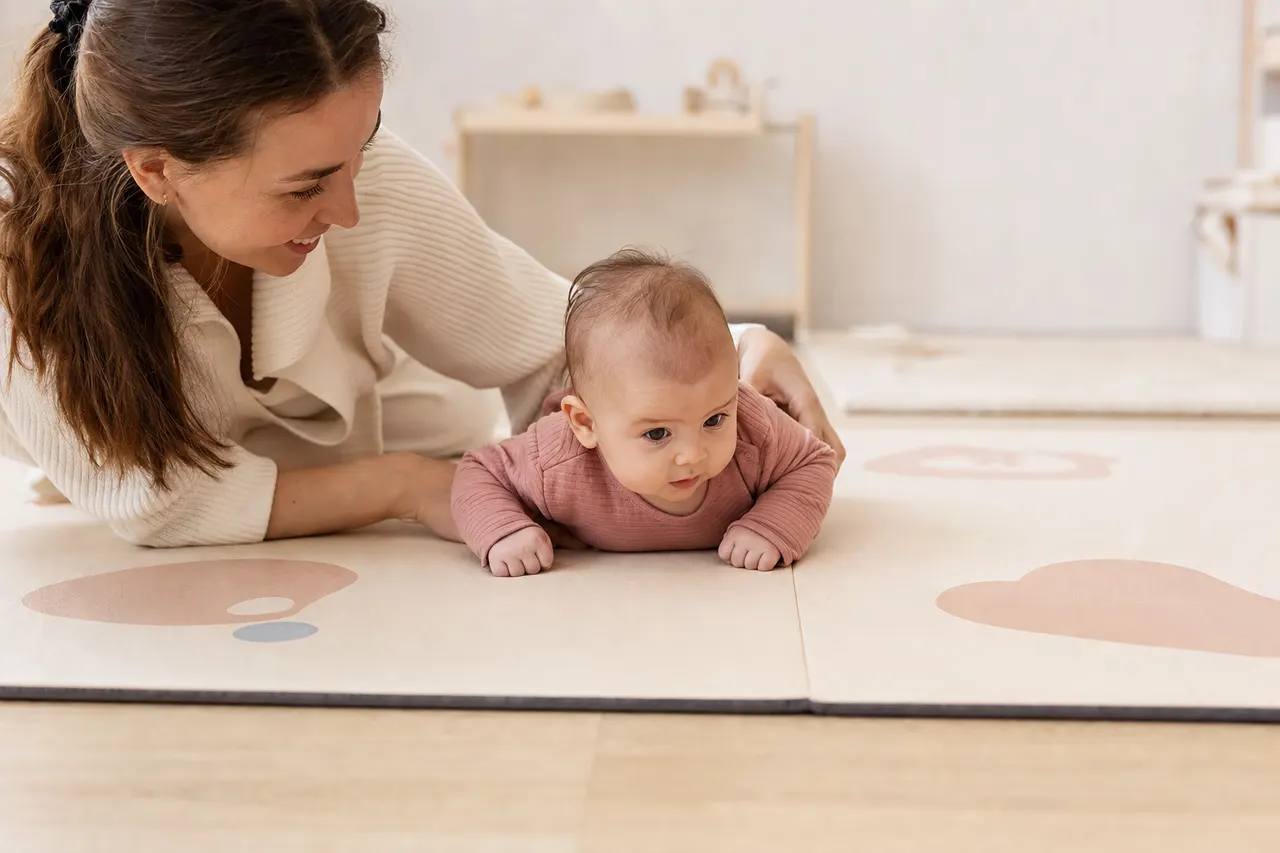
Head control develops gradually through everyday movement and supervised awake tummy time. Newborns need full support; brief lifting appears early, then steadier control grows over the following months.
Reviewed and updated:
A gradual sequence
- Newborn: the head needs support during lifting and carrying
- Around two months: many babies briefly hold the head up on the tummy
- Around four months: head control is steadier when the baby is held
- Later: stronger shoulders and trunk support reaching, rolling and sitting
Safe practice
Try several short tummy-time sessions while your baby is awake and directly supervised. Your chest can be an easier starting surface. On the floor, get down at eye level and stop when your baby is tired or distressed.
- Always support the head and neck during transfers until control is reliable
- Use a firm, clear floor mat rather than a sofa or bed
- Tummy time is for awake practice only
- Return the baby to their back on a separate flat sleep surface for every sleep
What not to do
Do not pull a young baby by the arms to make them sit, use weighted equipment or hold the head in a forced position. More minutes are not always better; frequent calm practice is useful.
Ask about unusual movement
Common questions
Can tummy time happen on a parent’s chest?
Yes, if the adult is fully awake and actively supervising. It can be a gentle starting position before floor sessions.
Should I use a pillow for tummy time?
A clinician may demonstrate specific positioning, but ordinary tummy time should use a firm clear surface. Never leave a baby unattended with a pillow and never use one in the sleep space.