how to play with newborn and young baby
How to Play With a Baby From 0 to 6 Months
The most useful early play is simple and responsive: faces, voices, touch, floor movement, songs, books and safe objects to look at and reach for. Babies do not need constant entertainment.
Reviewed and updated:
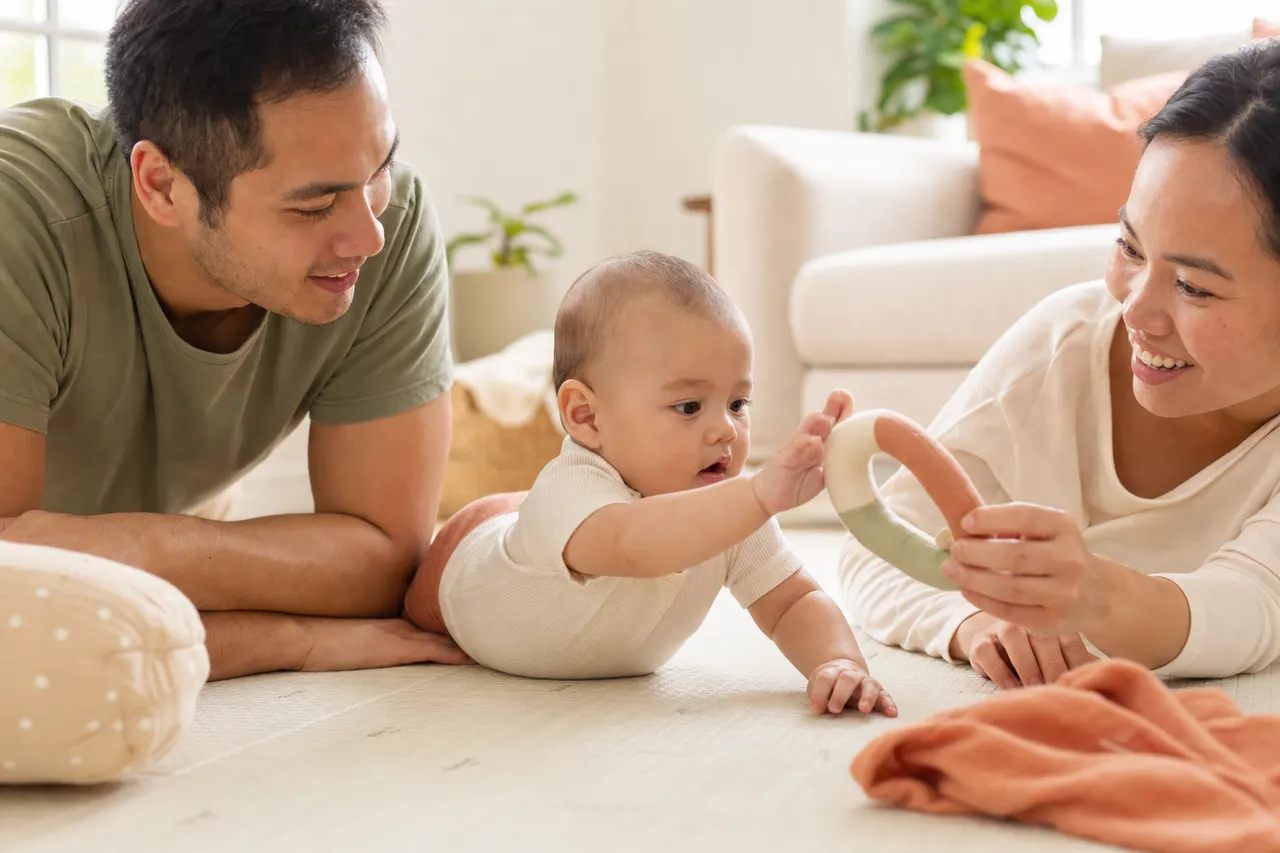
Birth to about two months
- Hold your face within comfortable viewing distance
- Talk slowly and copy small sounds
- Sing familiar songs
- Offer short supervised tummy time on your chest or a firm mat
- Pause when your baby looks away or needs rest
Around two to four months
- Smile and wait for a smile or movement back
- Move one simple toy slowly across the visual field
- Let your baby touch safe textures
- Read picture books and describe what you see
- Offer plenty of free movement on the floor
Around four to six months
- Place a safe toy within reaching distance
- Take turns making sounds
- Play simple peekaboo
- Use a mirror during supervised play
- Name familiar people and everyday objects
Keep play safe
Common questions
How long should I play with a young baby?
There is no required session length. Several short moments woven into feeding, changing and floor time are enough. Your baby’s cues determine when to continue or pause.
Does a baby need electronic learning toys?
No. Young babies learn through responsive human interaction, movement and safe exploration. Simple books and household routines provide rich learning.