when do babies sit up
When Do Babies Sit Up? From Supported Balance to Independent Sitting
Sitting develops from head and trunk control, weight shifting and protective use of the hands. Around six months many babies lean on their hands for support; stable independent sitting often comes later.
Reviewed and updated:
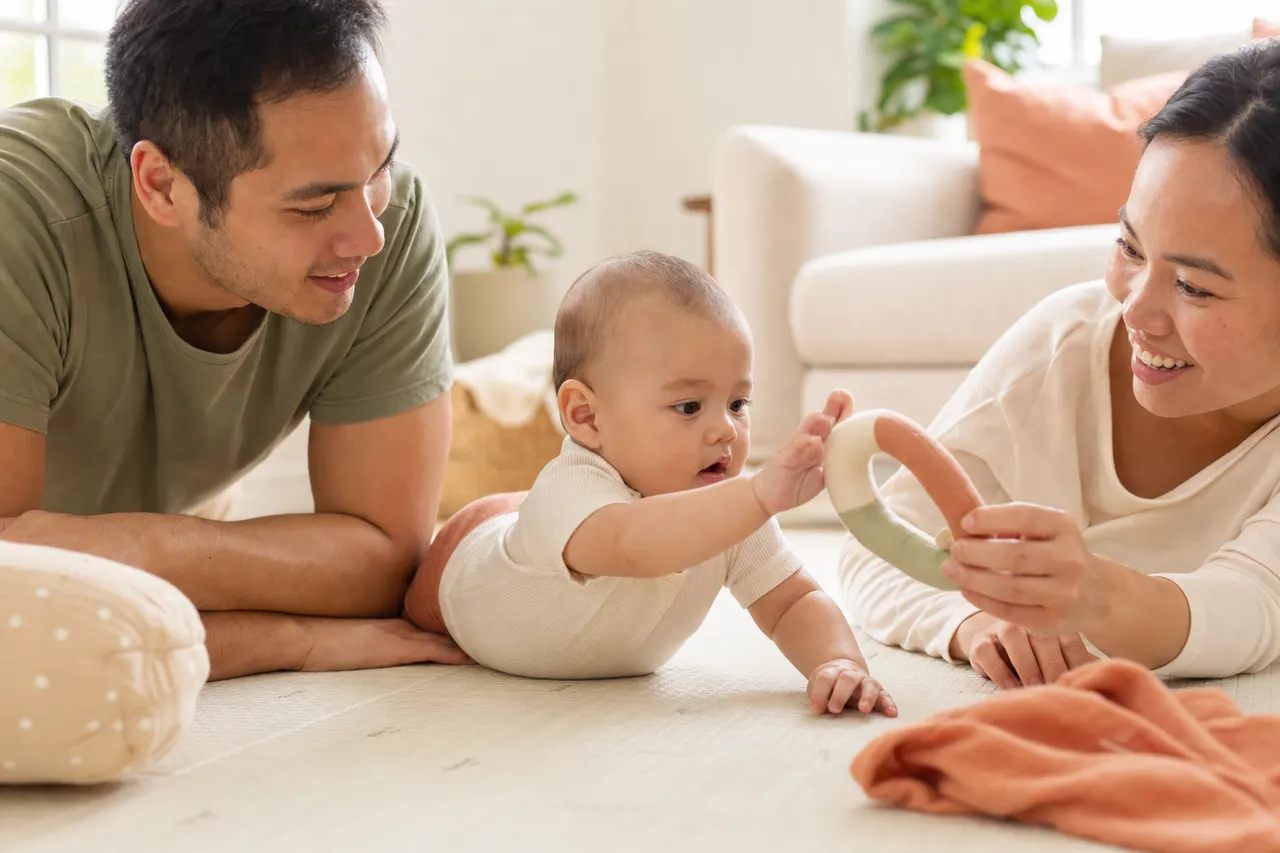
Skills that come before steady sitting
- Growing head control
- Pushing through the arms during tummy time
- Turning and reaching across the body
- Using both hands during play
- Leaning forward on the hands for support
How to offer practice
Sit on the floor with your baby between your legs or support gently around the trunk. Use a safe toy at chest level for a brief attempt, then return to free play before your baby becomes tired.
- Practise on the floor, away from hard edges
- Stay close enough to catch a fall
- Do not leave a baby sitting on a bed, sofa or raised surface
- Avoid devices that promise to teach sitting
Development is variable
Prematurity, health history and individual movement patterns affect timing. One isolated date is less useful than observing steady progress across several skills.
Bring questions to a professional
Common questions
Do floor seats teach babies to sit?
A device can hold a baby in a position, but it does not replace the active balance learned through free movement and supervised floor play.
Should a six-month-old sit independently?
Many six-month-olds still need support and may lean on their hands. Use milestone guidance as a prompt for discussion, not a pass-or-fail test.